
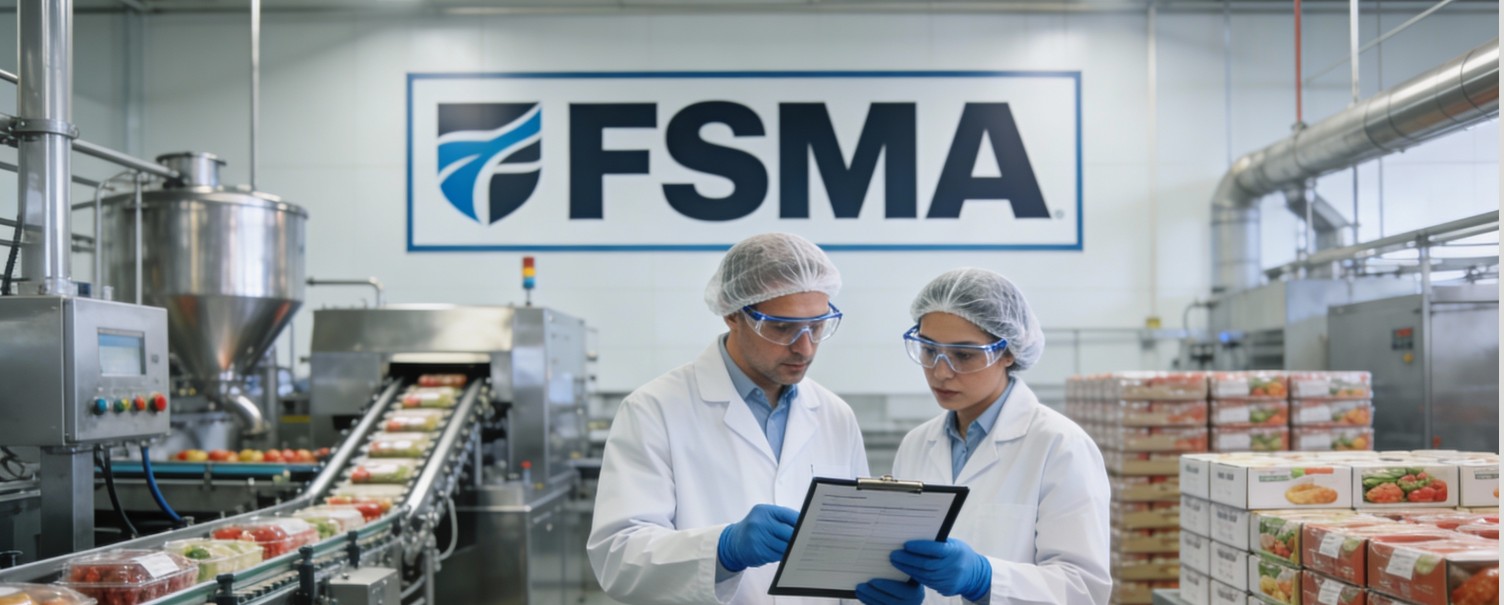
The FDA Food Safety Modernization Act (FSMA) is the most significant overhaul of U.S. food safety law since the 1938 Federal Food, Drug, and Cosmetic Act, and it fundamentally shifts the system from reacting to outbreaks to preventing them. For food businesses, FSMA is less about checking a regulatory box and more about building structured, evidence-based controls into everyday operations.
Why FSMA Exists
FSMA was signed into law on January 4, 2011, after a series of high-profile outbreaks underscored the limits of a reactive system that intervened only after people became sick. Public health data made the case hard to ignore: the CDC estimates that foodborne diseases in the United States cause millions of illnesses and thousands of hospitalizations and deaths each year.
Beyond the human cost, single incidents can inflict hundreds of millions of dollars in supply chain damage; academic work on the 2018 romaine E. coli outbreak, for example, estimated total losses well north of a quarter-billion dollars once growers, processors, and retailers were included.
FSMA’s core premise is straightforward: prevention is cheaper and more humane than managing the fallout from large-scale recalls and outbreaks.
The Big Shift: From Reaction to Prevention
Before FSMA, much of U.S. food law was built around enforcing standards after contamination occurred—through inspections, sampling, and recalls once a problem surfaced. FSMA flips that logic. It requires businesses to:
- Systematically analyze where hazards could arise.
- Put preventive controls in place.
- Monitor that those controls are working.
- Correct problems and document what happened.
The law also recognizes that modern food supply chains are global and interconnected. FSMA explicitly extends responsibility across growers, processors, transporters, and importers, rather than assuming FDA or border inspection alone can keep unsafe food out of commerce.
FSMA’s Seven Foundational Rules
FSMA is implemented through seven major rules that cover different parts of the food system but are designed to work together.
1. Preventive Controls for Human Food
This is the core rule for most food and beverage manufacturers. It requires facilities to:
- Conduct a written hazard analysis for biological, chemical, and physical risks.
- Identify and implement risk-based preventive controls.
- Monitor those controls and take corrective actions when things go off spec.
- Verify that the system works and keep records.
Facilities must designate a Preventive Controls Qualified Individual (PCQI)—either trained under FDA-recognized curricula or with equivalent experience—to develop and oversee the food safety plan. Practically, that pushes companies beyond a “binder on the shelf” and into continuous, documented process control.
2. Preventive Controls for Animal Food
This rule mirrors the human food framework but applies to animal food, including pet food and livestock feed. Key requirements include:
- Current Good Manufacturing Practices (CGMPs) for animal food.
- Hazard analysis and preventive controls where needed.
- Special attention to cross-contamination in facilities handling both human- and animal-grade ingredients.
The intent is the same: move from sporadic enforcement actions to systematic prevention across the animal food sector.
3. Produce Safety Rule
The Produce Safety Rule sets federal, science-based standards for growing, harvesting, packing, and holding produce typically consumed raw. It focuses heavily on areas where contamination often starts:
- Agricultural water quality and testing.
- Use and treatment of biological soil amendments (e.g., manure, compost).
- Worker health and hygiene.
- Equipment, tools, and building sanitation.
Because contamination introduced in the field often cannot be “cooked out” later, the rule pushes prevention as far upstream as possible.
4. Foreign Supplier Verification Programs (FSVP)
FSVP reshapes the role of importers. Instead of relying on border inspection alone, U.S. importers must verify that their foreign suppliers meet U.S. food safety standards. Importers are expected to:
- Analyze hazards for each imported food.
- Evaluate supplier performance and risk.
- Conduct appropriate verification activities (e.g., audits, sampling, documentation).
- Maintain records and update them as conditions change.
If a foreign supplier refuses inspection or fails to meet requirements, FDA can refuse admission of those foods at the border, and the U.S. importer is on the hook legally and commercially.
5. Sanitary Transportation of Human and Animal Food
This rule covers shippers, loaders, carriers, and receivers moving food by motor or rail in the United States.
It requires:
- Sanitary practices for equipment (cleaning, protection from contamination).
- Temperature control for perishable foods.
- Written procedures and training where appropriate.
Even if a facility is fully compliant, food can become unsafe if transport conditions are unsanitary or poorly controlled; this rule is designed to close that gap.
6. Intentional Adulteration (Food Defense)
FSMA doesn’t just address accidental contamination; it also targets acts intended to cause wide-scale public harm. Covered facilities must:
- Conduct a vulnerability assessment to identify where intentional contamination could have the greatest impact.
- Implement mitigation strategies at those “actionable process steps.”
- Monitor and verify that those strategies are in place and effective.
Common focal points include bulk liquid storage, large ingredient silos, and other high-impact steps accessible to multiple employees or contractors.
7. Accredited Third-Party Certification
This voluntary program allows FDA to recognize accreditation bodies that, in turn, accredit third-party auditors to certify foreign facilities and foods.
Certification can be used to support import decisions and to qualify importers for expedited review and entry programs, turning robust compliance into a commercial advantage.
The New Era of Smarter Food Safety and FSMA 204
FSMA laid the statutory groundwork; the FDA’s New Era of Smarter Food Safety builds on it with a more explicit focus on digital tools, data, and traceability. The Food Traceability Rule (often referred to as FSMA 204 ) is a centerpiece of this push. The rule:
- Identifies specific high-risk foods on the Food Traceability List.
- Requires companies that manufacture, process, pack, or hold these foods to maintain additional traceability records.
- Defines Key Data Elements (KDEs) that must be recorded at Critical Tracking Events (CTEs) such as harvesting, initial packing, shipping, and receiving.
When FDA requests records during an investigation, covered entities must be able to provide traceability data within tight timeframes, often 24 hours.
That is driving a shift away from paper-heavy systems and toward integrated digital traceability platforms that support “one step back, one step forward” visibility across the supply chain.
How FSMA Is Enforced in Practice
FSMA is implemented through a National Integrated Food Safety System that leverages state, local, tribal, and territorial partners for inspection and enforcement.
To harmonize expectations and training, FDA works with several Alliances, including the Produce Safety Alliance (PSA), the Food Safety Preventive Controls Alliance (FSPCA), and the Sprout Safety Alliance, which develop standardized curricula widely used to train growers, processors, and PCQIs. Inspection cadence and requirements are generally risk-based:
- High-risk domestic facilities are to be inspected at regular intervals, often every three years.
- FDA can access food safety plans and related records during inspections.
- For foreign facilities, refusal to permit inspection can lead to refusal of admission for their products.
Business size also matters
Compliance dates and, in some cases, modified requirements are tied to average annual sales, with smaller businesses typically given more time to implement while still expected to meet core safety objectives.
So The FSMA helps explain why labels, recalls, and sourcing conversations look different today than they did fifteen years ago. Behind many of those changes is a legal framework that expects prevention, documentation, and accountability rather than trust and post hoc enforcement. For brands and manufacturers—even relatively small or fast-growing ones—the strategic implications are broader than “avoiding 483s” or warning letters:
- A well-designed food safety plan becomes an operational roadmap, not just a regulatory artifact.
- Supply chain transparency and supplier verification are increasingly prerequisites for retailer relationships and export access.
- Investments in traceability and digital recordkeeping can both support FSMA 204 compliance and unlock better inventory, quality, and recall management.
The core idea remains consistent: prevention is both good public health policy and sound business strategy. FSMA simply hardwires that logic into law and expects every link in the chain—from farm to importer—to act accordingly.