
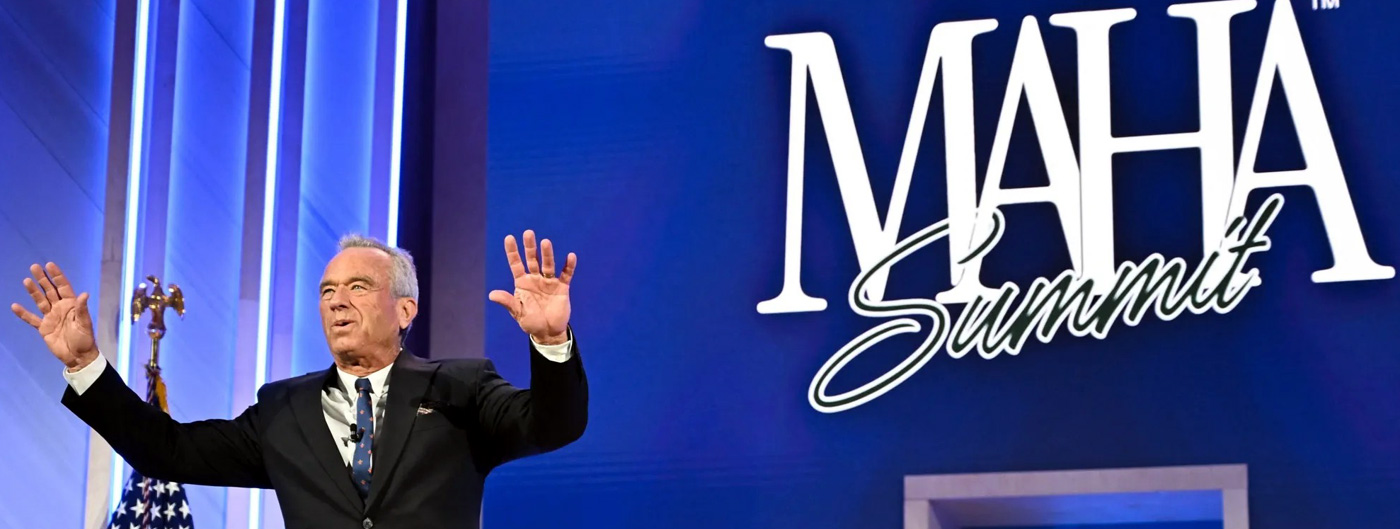
The “Big Food” industry is clashing with the “Make America Healthy Again” (MAHA) movement, led by Robert F. Kennedy Jr., over food regulations. MAHA pushes for stricter standards on additives, dyes, and sugar to combat chronic disease, while Big Food lobbies for federal preemption of state laws to avoid costly, conflicting ingredient bans.
MAHA’s push to regulate ultra-processed foods has triggered opposition from major corporations like Kraft Heinz, Nestlé, and PepsiCo, who argue that aggressive state-level health reforms threaten the economic stability of the national food supply chain.
The Industry Counter-Offensive: Americans for Ingredient Transparency
In October 2025, more than three dozen food companies and trade groups launched Americans for Ingredient Transparency (AFIT), aiming to oppose a patchwork of state regulations. AFIT claims inconsistent laws will increase grocery costs and create supply chain chaos.
| Key Member Categories | Notable Organizations |
|---|---|
| Major Corporations | The Coca-Cola Company, PepsiCo, Nestlé, General Mills, Kraft Heinz, Tyson Foods, Conagra Brands |
| Trade Associations | Consumer Brands Association, American Beverage, American Frozen Food Institute, National Restaurant Association |
| Commodity Groups | Corn Refiners Association, American Farm Bureau Federation, American Soybean Association |
AFIT emphasizes affordability as its central argument. Internal polling shows grocery costs are a top concern, and lobbyists warn that sweeping reform would drive up prices for working families.
RFK Jr. and the MAHA Critique of Ultra-Processed Foods
Kennedy has labeled America’s food supply a public health crisis. He cites examples to highlight disparities in food standards:
- McDonald’s French Fries: UK version contains 4 ingredients. U.S. version has 11–14, including artificial flavoring and preservatives.
- Kellogg’s Froot Loops: Canada/UK use natural colors. U.S. uses synthetic dyes like Red 40 and Yellow 5.
Kennedy calls for stricter safety standards and rejects federal preemption that blocks stronger state laws.
The State-Level Legislative Landscape
Multiple states are now advancing “Food Safety Acts” targeting FDA-permitted additives linked to health concerns.
| State | Key Legislation | Primary Provisions |
|---|---|---|
| California | AB 418 & AB 2316 | Bans Red Dye No. 3, Potassium Bromate, BVO; prohibits six synthetic dyes in school meals. |
| Texas | HB 10 (2025) | Requires warning labels on products with 44 identified additives. |
| Oklahoma | Senate Bill 4 | Bans 21 ingredients, including aspartame, sodium nitrate, and Red Dye 40. |
The Preemption Debate and the 2026 Outlook
The major battle is over federal preemption—the industry’s push for a single national rule. MAHA advocates argue this would weaken state-level protections and preserve the status quo.
As both sides prepare for the 2026 election cycle, food safety is evolving from a fringe issue into a mainstream political and economic fight that could reshape U.S. food policy.