
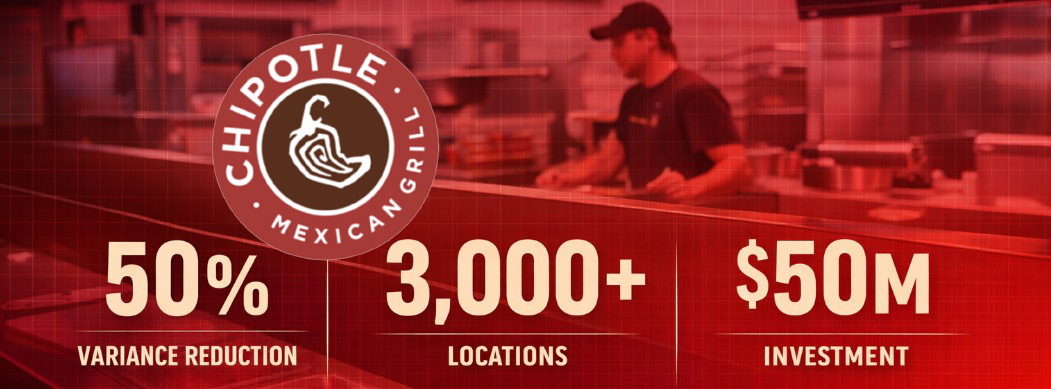
Chipotle Mexican Grill operates over 3,000 locations with a technological infrastructure most consumers never see. Behind the customizable bowls and fresh guacamole runs a sophisticated artificial intelligence framework managing demand forecasting, marketing precision, and kitchen automation. Jeremy Elster, Data Science Manager at Chipotle, recently detailed how the fast-casual chain leverages H2O.ai and advanced machine learning to optimize operations across its restaurant network.
Demand Forecasting Architecture
Food waste represents one of the restaurant industry’s most persistent operational challenges. Overproduction drives up costs and environmental impact. Underproduction creates customer friction and lost revenue opportunities.
Chipotle’s Enterprise Analytics team addressed this through comprehensive data infrastructure modernization. The company migrated from legacy on-premise SQL servers to a cloud-based stack utilizing Azure, Snowflake, and H2O Driverless AI.
The transformation yielded measurable improvements:
- Forecasting model runtime dropped from 24 hours to minutes
- Variance in predictions decreased by 50%
- Location-level staffing and inventory alignment improved significantly
The system ingests weather patterns, local event data, and historical sales information to generate precise demand predictions. Restaurants now maintain optimal inventory levels and staff deployment, particularly during peak traffic periods.
Personalization and Customer Targeting
Marketing efficiency suffers when promotional campaigns lack behavioral precision. Generic offers to loyalty program members create noise rather than engagement.
During the Garlic Guajillo Steak launch, Chipotle used H2O Driverless AI to segment its 30 million rewards members based on actual purchase patterns and preferences. The platform identified which customers would respond positively to the protein-focused promotion.
Key outcomes included:
- 6.5% accuracy improvement through automated feature engineering
- Discovery of novel variable combinations human analysts hadn’t identified
- Targeted messaging that reached meat-preferring customers while avoiding irrelevant outreach to plant-based consumers
The system’s ability to rapidly integrate new datasets and generate refined models without extensive manual tuning demonstrates the scalability advantages of automated machine learning platforms.
Automation Investment: The Cultivate Next Fund
Chipotle established a $50 million venture fund called Cultivate Next to invest in technologies that automate repetitive, physically demanding, or hazardous tasks. This strategic focus aims to redirect human labor toward customer interaction and service quality.
Current portfolio implementations include:
- Chippy: An autonomous robotic system that fries, seasons, and portions tortilla chips with consistent quality. The technology is currently operational in Fountain Valley, California.
- Hyphen: A fully automated assembly system designed specifically for digital orders. The platform constructs bowls with precise portioning and accuracy, addressing the increasing volume of app-based transactions.
- PreciTaste: A computer vision and sensor system that monitors food pan levels in real-time. The platform provides grill cooks with data-driven timing recommendations, ensuring proteins are cooked to order based on actual demand patterns rather than estimated schedules.
Strategic Implications
Chipotle’s approach illustrates how enterprise-scale food service operations can deploy machine learning to address fundamental operational challenges. The company’s data science team uses H2O.ai’s platform to democratize analytical capabilities, allowing a relatively small group of specialists to generate system-wide impacts.
The integration of demand forecasting, personalized marketing, and kitchen automation represents a cohesive operational strategy. These technologies don’t simply improve individual processes. They create compounding efficiencies across the supply chain, from procurement and preparation to customer engagement and satisfaction.
For food industry professionals, Chipotle’s framework offers a blueprint: modernize data infrastructure first, then layer in specialized AI applications that address specific operational pain points. The return on investment manifests in reduced waste, improved labor allocation, and enhanced customer experience metrics.