
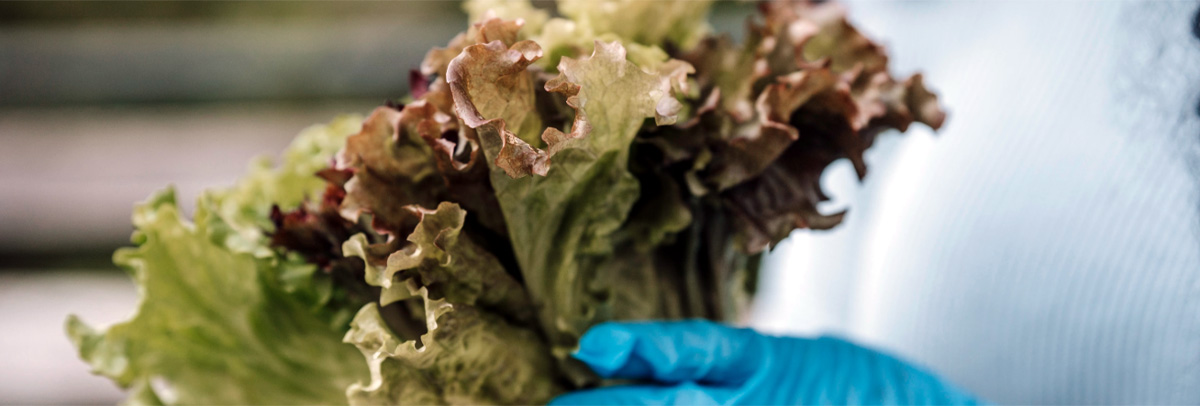
A parasite called cyclospora is causing consumers across the U.S. to suffer from Cyclosporiasis which manifests itself as “explosive diarrhea”. On July 17 Federal health officials identified lettuce from Mexico served at Taco Bell locations across five U.S. states (which came from Taylor Farms of Salinas, California) as a source of the widespread outbreak of the parasite. Then on July 19, 2026, the FDA retracted its report stating a Taylor Farms product sample tested positive for Cyclospora, confirming that the result was a false positive due to testing error. Despite this, the investigation remains active as of July 20, 2026, with epidemiological data still linking the outbreak to iceberg lettuce from central Mexico.
Cyclospora cayetanensis is a single-celled parasite you’d need a microscope to see, and it has quietly become one of the most expensive headaches in fresh produce. E. coli and Salmonella are bad news too, but at least the industry knows how to hunt them down and kill them. Cyclospora doesn’t play by those rules. It wrecks supply chains, hides from investigators, and drags regulators into the mix.
Supply chains dread it because simply washing the product doesn’t work. The parasite has a tough outer shell. Chlorine rinses, triple-washing, all the standard sanitizing steps in commercial processing? They don’t kill it, and they don’t reliably scrub it off produce either. Cyclospora lives on raw food. You need 158°F (70°C) to kill the parasite. Trouble is, the foods it turns up on are the ones nobody cooks. Cilantro, basil, berries, leafy greens. There’s no kill step anywhere between the field and the plate.
The lag makes tracing nearly impossible. Symptoms of cyclosporiasis (think explosive, watery diarrhea) take one to two weeks to show up. By the time someone feels sick, sees a doctor, and gets a lab confirmation, the contaminated produce is long gone. Eaten, spoiled, tossed. Investigators are chasing a ghost.
What it’s cost the industry lately
- The Taco Bell lettuce outbreak. Federal health officials tracked hundreds of illnesses across Michigan, Ohio, Indiana, and other states back to shredded iceberg lettuce from a supplier sourcing out of Mexico. Taco Bell suspended the supplier and yanked lettuce from restaurants in the affected states, basically overnight. That’s the kind of hit a major chain can’t plan for.
- Category-wide recalls. When an outbreak gets pinned to a broad category (salad kits, parsley, imported berries) the damage spreads well past one grower. Retailers clear entire shelves, millions of dollars in inventory hits the dumpster, and shoppers start second-guessing the whole produce aisle.
- Water rules are tightening. Cyclospora spreads through water contaminated with human feces, so the FDA and international regulators have zeroed in on agricultural water.
Growers now face rigorous and expensive irrigation testing protocols, especially in tropical and subtropical growing regions that export to the US.
Surveillance is fraying. Food companies depend on fast, accurate public health data to issue targeted recalls. But funding cuts and policy shifts (the CDC making state Cyclospora reporting optional under certain programs, for instance) have weakened the national picture. Slower federal response means outbreaks drag on unresolved, and consumer confidence in fresh produce takes the hit.
More Resources