
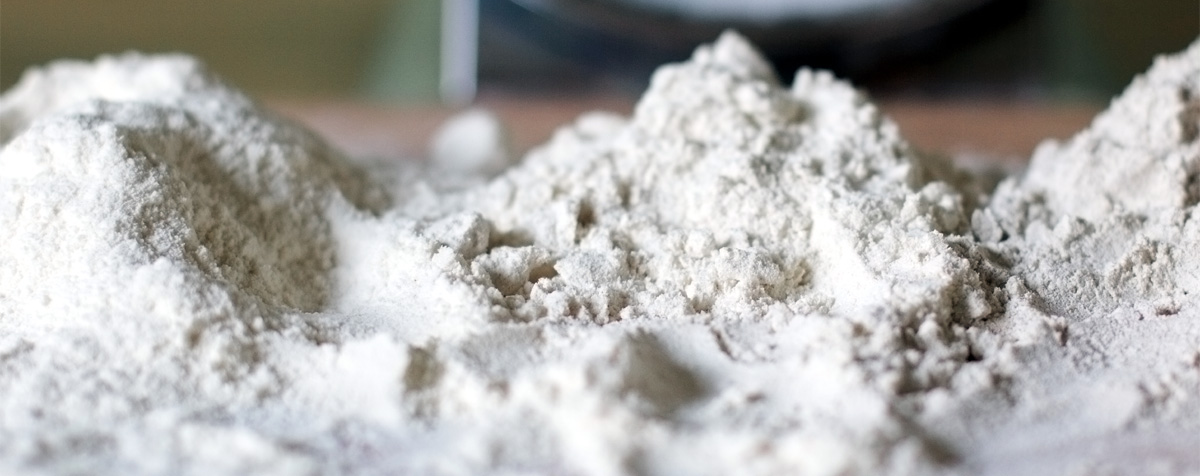
White flour, the staple ingredient in bread, pasta, pastries, and countless other foods, is more than just a bag of powder found in the pantry. It is the result of a precise, multi-step industrial process designed to transform a whole grain into a refined product. While the journey from field to table seems simple, the transformation of wheat into white flour involves careful selection, mechanical processing, and a specific chemical treatment to achieve its signature color and texture.
Here is a step-by-step look at how white flour is made.
1. Selection and Cleaning
The process begins with raw wheat kernels harvested from the field. These kernels are not immediately ready for milling; they must first be cleaned.
- Impurity Removal: The raw wheat is passed through screens and air classifiers to remove dirt, stones, metal fragments, and other foreign materials.
- Sorting: Modern facilities often use optical sorters that use cameras and air jets to detect and eject discolored or damaged kernels, ensuring only high-quality grain enters the milling line.
2. Conditioning (Tempering)
Before the wheat can be ground, it needs to be conditioned. This is a critical step that affects the final quality of the flour.
- Moisture Adjustment: Wheat kernels are naturally dry. Millers add a small amount of water (tempering) to the grain. This softens the outer bran layer (the husk) without damaging the inner endosperm (the starchy part).
- Why it matters: If the bran is too hard, it will shatter during grinding, contaminating the flour with dark particles. If it is too soft, it may stick to the endosperm, making separation difficult.
3. Milling: The Separation Process
The core of white flour production is the separation of the wheat kernel into its three main components: the bran (outer layer), the germ (embryo), and the endosperm (inner starchy part). White flour consists almost entirely of the endosperm.
This separation is achieved through a series of grinding and sifting steps:
- Roller Milling: The conditioned wheat is fed into a series of heavy steel rollers. These rollers crush the kernels, breaking them apart. The rollers are set with a specific gap to control the size of the particles.
- Sifting: The crushed mixture is passed through a series of vibrating screens (sifters). These screens separate the particles by size:
- Fine particles: Mostly endosperm (the desired flour).
- Coarse particles: Mostly bran and germ fragments.
- Purification: The coarse particles are sent back to the rollers for further grinding. The fine particles are collected as flour.
- Repetition: This cycle of grinding and sifting is repeated many times. Each pass gets the flour whiter and purer by removing more bran and germ.
4. Sifting and Blending
After the initial separation, the resulting flour is not yet uniform.
- Fine Sifting: The flour is passed through fine meshes to ensure a consistent particle size.
- Blending: Flour from different parts of the mill is mixed together. This ensures that the final product has a uniform color, texture, and protein content, regardless of slight variations in the wheat batch.
5. Bleaching and Enrichment (Optional but Common)
At this stage, the flour is technically “refined,” but it may still have a slightly yellowish tint due to residual carotenoids (pigments) from the wheat. To produce the bright white flour consumers expect, two additional steps are often taken:
- Bleaching: Chemical agents (such as benzoyl peroxide or ascorbic acid) are added to the flour. These agents oxidize the pigments, turning the flour bright white. This also helps to soften the gluten, making the flour better for baking cakes and cookies.
- Enrichment: The milling process removes the germ and bran, which contain essential nutrients like iron, B vitamins, and fiber. To compensate, manufacturers often add back synthetic versions of these nutrients (iron, thiamin, riboflavin, niacin, and folic acid) to match the nutritional profile of whole wheat flour. This is required by law in many countries, including the United States.
6. Packaging and Distribution
Once the flour has reached the desired whiteness and consistency, it is cooled, weighed, and packaged. It is then shipped to bakeries, grocery stores, and restaurants.
The final product, white flour, is a highly refined carbohydrate. It is low in fiber and fat because the nutrient-rich bran and germ have been removed. However, through enrichment, it retains some of the vitamins lost during milling.
Understanding this process highlights the difference between white flour (refined, bleached, enriched) and whole wheat flour (which includes the bran and germ, offering more fiber and nutrients but a darker color and different texture).
From a simple grain to a versatile culinary staple, the journey of white flour is a testament to human ingenuity in food processing, balancing tradition with modern technology to meet global dietary needs.